Navigating London Open-Air Trimmings on Portobello Road
Stretching across the spine of Notting Hill, Portobello Road has served as an essential corridor for classic British tailoring, robust Scottish tweeds, and vintage workwear for over a century.
The Geography of the Notting Hill Stalls
Portobello Road is not a singular market stall row, but rather a sequenced progression of commercial zones extending from Pembridge Road northwards toward Golborne Road. The southernmost stretch centres on porcelain and silver, but as one approaches the intersection with Elgin Crescent and moves beyond the Westway flyover, apparel takes supreme prominence.
Beneath the concrete canopy of Portobello Green, independent textile dealers assemble collections of Savile Row bespoke suits, historic British military tunics, and wax cotton shooting jackets. Unlike commercial department stores, vendors here possess deep technical knowledge of collar canvases, horn button stampings, and regional mills in Yorkshire and the Scottish Borders.
The British Outerwear Tradition
The core draw of Portobello Road remains outerwear engineered to withstand damp maritime climates. Hunters routinely uncover gabardine trench coats tailored during mid-twentieth-century manufacturing peaks, constructed with double-layered storm flaps, raglan sleeves, and brass D-rings.
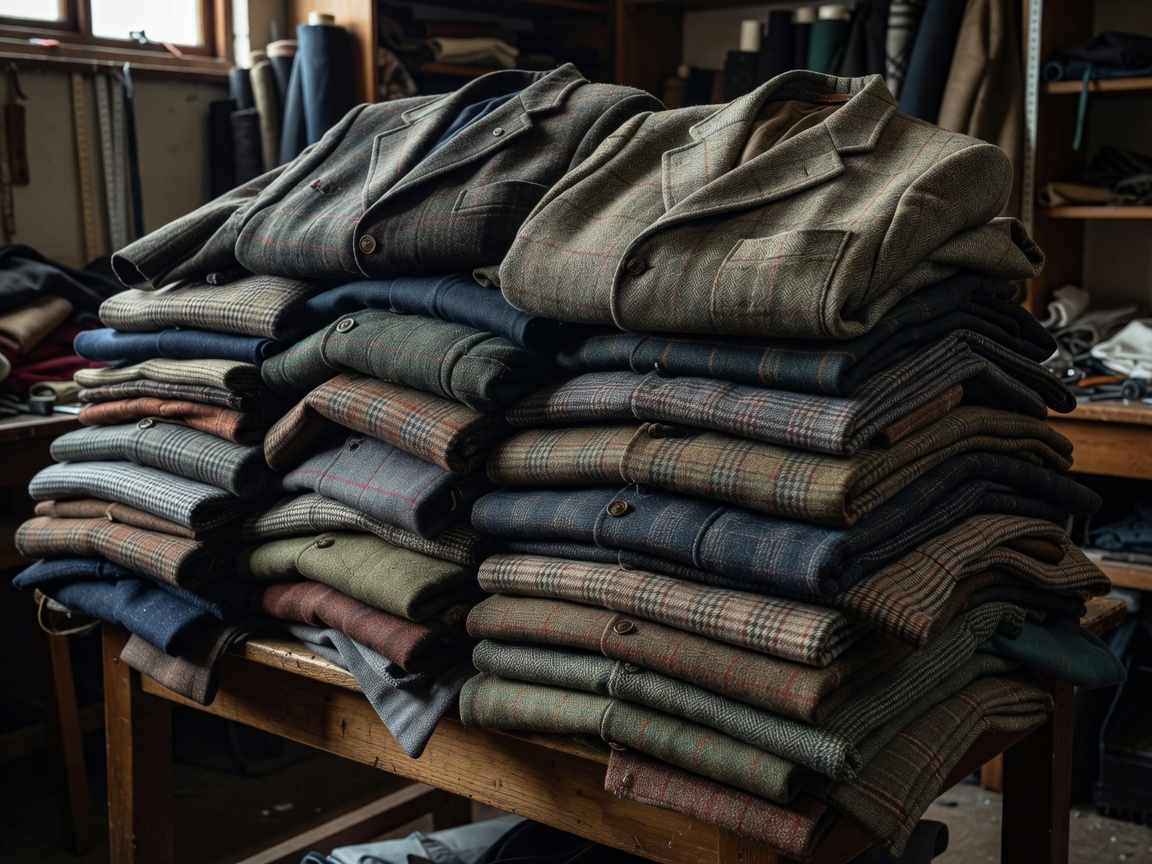
Similarly, tweed jackets made of Cheviot and Shetland wool feature prominently. These garments preserve an unhurried density of yarn rarely matched by contemporary spinning equipment. When inspecting these pieces, collectors examine the roll of the lapel and the presence of hand-stitched floating canvas interlinings, which mold to the wearer’s body over decades of use.
Key Sourcing Arcades and Street Sectors
Understanding where vendor specialisations congregate saves hours of wandering along the mile-long stretch:
- Portobello Green Canopy: Concentrated under the elevated motorway on Fridays and Saturdays, this sheltered zone hosts high-end vintage dealers focusing on 1940s to 1980s designer archives and British subcultural outerwear.
- Golborne Road Extension: Further north, Golborne Road merges Moroccan street food stalls with informal antique furniture and bric-a-brac rails, where lower-priced, uncurated wool sweaters and chore coats can be sifted directly from canvas bags.
- Admiral Vernon Arcade: Positioned closer to the southern end, several subterranean basement stalls house collectors with museum-grade military uniforms, silk waistcoats, and Edwardian travelling capes.
London Woollen Sourcing Checklist
Lapel Roll & Canvassing
Pinch the cloth below the lapel. A shifting middle layer denotes true floating horsehair canvas rather than stiff heat-fused synthetic glue.
Underarm & Collar Moth Checks
Hold untreated wools against backlighting to reveal microscopic moth grazes that weaken fabric before holes become plainly visible.
Cuff Hem Allowances
Inspect interior sleeve hems to calculate whether sufficient extra fabric remains for bespoke tailor extensions or sleeve alterations.
Preservation and Care of Market Woollens
Acquiring a heritage wool garment from an open-air market requires an immediate care routine. Fresh acquisitions should never be hung directly alongside domestic wardrobes. Seasoned buyers place unwashed vintage wool garments into breathable linen bags and place them into sub-zero freezing for 72 hours to eliminate lingering larvae, followed by an unhurried gentle cedar steaming.