Parisian Brocantes and the Textile Traditions of Saint-Ouen
Spanning fourteen distinct markets clustered around the northern gates of Paris, Saint-Ouen constitutes the largest aggregation of antique dealers and vintage textile traders in the world.
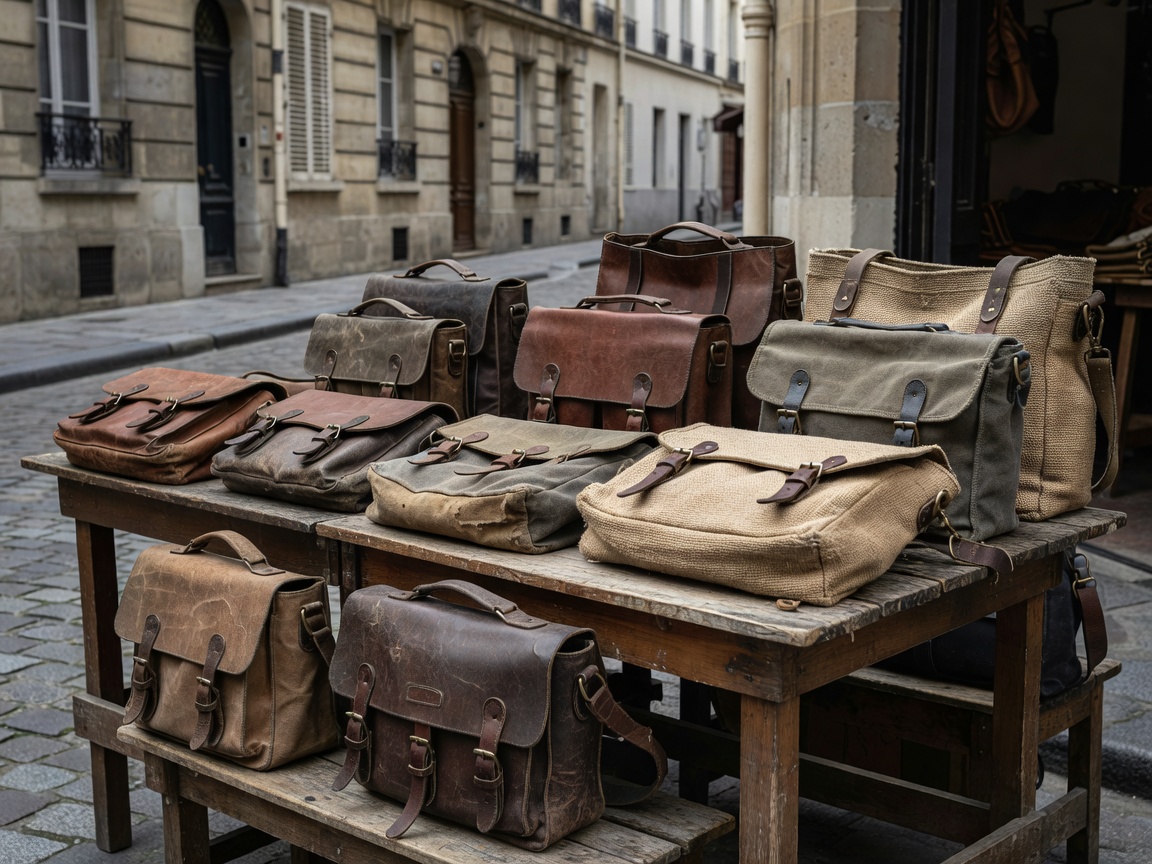
The Architecture of the Saint-Ouen Flea Market
Officially established in the late nineteenth century when ragpickers (chiffonniers) were expelled from the core of Paris, the Marché aux Puces de Saint-Ouen developed into an intricate community of covered passages, brick courtyards, and open sheds. Each individual enclave retains its own character.
While Marché Serpette caters to mid-century furniture and Marché Paul Bert attracts international decorators, apparel hunters focus their attention upon Marché Vernaison, Marché Dauphine, and Marché Malik. Within these passages, one transitions from museum-tier couture gowns to stacks of raw French chore coats dating from the industrial boom of the 1920s and 1930s.
The French Blue: Moleskin and Indigo Vêtements de Travail
Few garments hold as much reverence among textile historians as the classic French work jacket, known vernacularly as the veste de travail or bleu de travail. Fabricated primarily in dense cotton moleskin or indigo-dyed twill, these work garments were designed for locomotive drivers, stonemasons, and vineyard labourers.
Heavy moleskin is characterised by a dense, satin-weave cotton sheared on one side to produce a soft pile reminiscent of moleskin fur. In vintage Saint-Ouen stalls, early iterations are identified by curved club collars (col chemise), rounded pocket corners, and unbranded stamped metal buttons. The gradual wear patterns, caused by decades of physical labour and natural sun fading, produce gradients of indigo that cannot be manufactured artificially.
Key Market Sectors for Apparel Enthusiasts
| Sector Name | Setting Style | Garment Speciality | Collector Appeal |
|---|---|---|---|
| Marché Vernaison | Winding leafy outdoor alleyways | Antique household linens, lace, chore jackets | Authentic rustic atmosphere, early 1900s fabrics |
| Marché Dauphine | Two-storey glass-roofed hall | High-end vintage couture, designer archives | Climate-controlled curated apparel collections |
| Marché Malik | Urban bustling arcade | Vintage streetwear, military parkas, denim | Casual mid-century utility pieces and leather goods |
Decoding Saint-Ouen Textile Authenticity
When assessing historic Parisian garments, inspect these subtle indicators of genuine vintage manufacture:
- Button Attachment: Hand-stitched bone or papier-mâché buttons on 19th-century garments versus stamped brass or vulcanised rubber fasteners from the 1930s.
- Selvedge Seams: Look along internal side seams for self-finished fabric edges, indicating narrower shuttle loom production that predates mass synthetic manufacturing.
- Dye Bleed: Authentic vegetable indigo reveals tonal variations in shaded pocket folds where daylight exposure was historically restricted.
Negotiation and Sifting Etiquette in Paris
Dealers in Saint-Ouen operate as learned connoisseurs rather than casual stall attendants. Entering an arcade without a courteous greeting ("Bonjour, Madame" or "Bonjour, Monsieur") immediately closes doors to deeper inventory. Merchants frequently hold pristine deadstock garments inside wooden armoires, revealing them only to polite visitors who demonstrate genuine appreciation for historical weaves.