London, United Kingdom
Portobello Road Market
Notting Hill’s legendary Saturday arcade and street stalls specialise in structured British outerwear, bespoke Savile Row surplus, and Scottish knitwear.
An observant review of dense open-air stalls, regional woollen weaves, weathered leather trade coats, and vintage textile treasuries surviving beyond contemporary mass manufacturing.
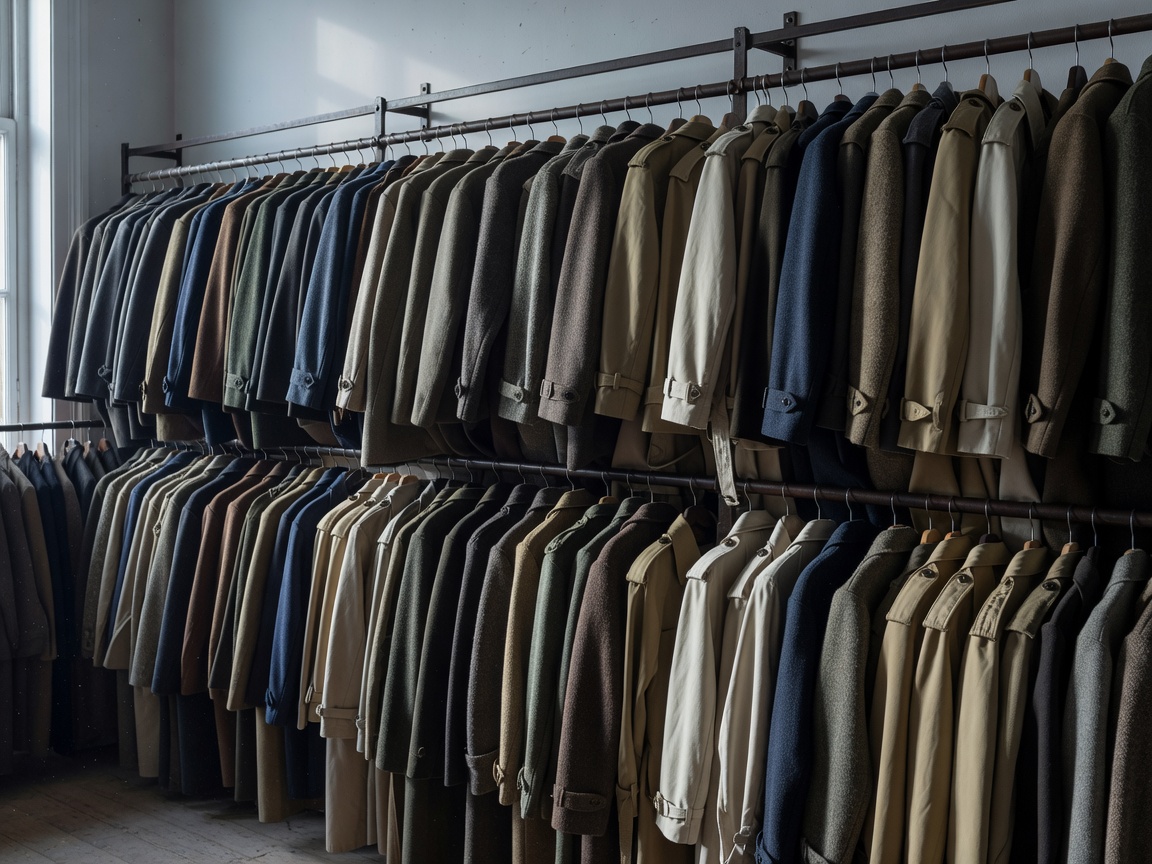
Across European capitals, open-air trading grounds remain living repositories of textile production. While retail high streets churn through synthetic fast fashion, long-standing street bazaars shelter dense tweeds from the Scottish Borders, structured work jackets made of French moleskin, hand-cut Italian leather overcoats, and heavy military canvases from mid-century Central Europe.
Garment collectors and discerning vintage hunters value physical markets for tactile confirmation. Photographs cannot convey the heft of unlined Scottish Harris Tweed, the dry crispness of antique Parisian linen, or the patina of vegetable-tanned hides found across Mediterranean flea markets. Our documentation focuses on the authentic material heritage preserved stall by stall.
Notting Hill’s legendary Saturday arcade and street stalls specialise in structured British outerwear, bespoke Savile Row surplus, and Scottish knitwear.
The sprawling labyrinth north of Paris holds century-old indigo chore coats, couture salon discards, and artisan linens inside historic arcades like Marché Vernaison.
Rome’s Sunday trading perimeter along Via Portuense unearths unconstructed Neapolitan sports jackets, silk foulards, and buttery Italian leather goods.
The former border strip of Prenzlauer Berg brings together utilitarian workwear, Austrian loden overcoats, and subcultural apparel from late twentieth-century Berlin.
Every European market culture evolved from unique merchant guilds, climatic demands, and domestic manufacturing belts. Understanding where each city excels prevents misdirected hunting and sharpens appreciation for distinct textile characteristics.
| Trading Enclave | Primary Textile Strengths | Structural Character | Typical Market Cadence | Fibre Focus |
|---|---|---|---|---|
| Portobello Road (London) | Trench coats, equestrian tweeds, Fair Isle knits | Rigid canvas interlinings, roped shoulders, horn buttons | Fridays & Saturdays (Dawn to afternoon) | Pure New Wool, Gabardine cotton |
| Marché Saint-Ouen (Paris) | Indigo work jackets, salon tailoring, silk squares | Single-needle felled seams, hand-rolled hems, heavy moleskin | Saturday, Sunday, Monday (Covered alleys) | Raw Flax linen, twill cotton, silk |
| Porta Portese (Rome) | Soft shoulder tailoring, leather outerwear, lambskin | Unlined construction, spalla camicia shirts, supple skins | Sunday mornings (Expansive street perimeter) | Fine merino wool, calfskin, nappa leather |
| Flohmarkt Mauerpark (Berlin) | Heavy loden coats, track jackets, canvas uniforms | Double-breasted boxy cuts, metal zippers, rugged stitching | Sundays (Open field bazaar) | Loden felt, heavy cotton drill, shearling |
Market stalls require disciplined physical assessment. Without the sanitised lighting and digital filters of e-commerce, the seeker must rely on touch, light inspection, and structural seam evaluation. Fastidious collectors apply a consistent routine before negotiating any vintage transaction.
Step clear of stall tarpaulins into daylight. Check for subtle fading across coat shoulders and verify natural fibre weight against modern hollow blends.
Turn jackets inside out. Inspect armpit linings for perspiration breakdown and tug softly on sleeve seams to detect dry, brittle thread rot.
Run antique zippers smoothly from stop to top. Confirm all matching horn or corozo buttons remain anchored on vintage double-breasted fronts.
Avoid aggressively crumpling garments. Fold examined textiles back into orderly stacks; seasoned market traders reserve their finest stock for respectful observers.
Navigating bustling continental squares requires clear tactical expectations. Below are common considerations addressed in depth within our full reference directory.
While established vintage pavilions in Paris accept card terminals, street stalls at Rome’s Porta Portese and Berlin’s Mauerpark remain predominantly cash-driven. Carrying smaller denomination euro and pound banknotes prevents negotiation friction.
Dawn arrivals between 07:00 and 08:30 encounter dealer-to-dealer unboxings, yielding pristine tailoring and rare workwear before rails are sifted by general weekend crowds.
Examine the reverse stitching, internal wash tags, and button backs. Genuine mid-century European workwear displays single-needle chain stitching, unbranded metal shank fasteners, and thick cotton thread rather than nylon filaments.
We use cookies Essential cookies keep this site working. Optional ones help us see what is useful. You can change your choice at any time. More about cookies